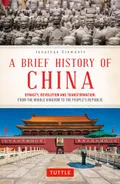
A Brief History of China
Jonathan Clements
Marked passages, in reading order
Highlights
-
Location 314
Ancient rulers of China did not so much have borders as diminishing influence on the areas around them.
-
Location 4274
Western scholarship saw the 1840s as a series of influences dragging China into the modern world, confronting it with global economics and the transformations of science and democracy. Chinese scholars saw similar factors at work, but emphasized the “Century of Humiliation” (Bainian Guochi)—a term still prominent in school textbooks in the People’s Republic. The modern world, for these scholars, amounted to a constant assault of double-crosses and betrayals, hypocrisies and corruption, until China broke free of both imperialism and capitalism with the creation of the People’s Republic.
-
Location 4289
We might equally argue that the period of “humiliation” began not in the 1840s, but two hundred years earlier, in 1644, when the first and most successful foreign element, the Manchus themselves, swept in from the northeast to form a lasting, exploitative aristocracy. Or, if we accept, as all modern Chinese books do, that the Manchus were simply another sector of the Chinese world, and that they were hence not really foreign, then surely their regime, with its wars of conquest in Central Asia, its self-assurance of its racial and cultural superiority, and a military mission that doubled the size of Chinese territory in the space of 150 years, was an immensely successful imperialist power, not all that different in attitude from the outsiders that would bring it down.